World Cup Day 4: Ranking (almost all) the stadiums
Which is the best stadium of this World Cup? Which is the worst?

In the run up to the last four World Cups, we were inundated with stories about the mad rush to build new stadiums and renovate old ones. Will they be done in time? Will they function? Are they up to the standard of the world’s biggest sporting event?
We’ve had none of this for this World Cup. That’s because all 16 stadiums have been standing and hosting matches for years, if not decades. The newest of the bunch opened nearly six years ago and the closest thing we had to work done on the venues was the renovation of Estadio Azteca, temporary seating at BMO Field, taking out the first few rows in some grounds to fit the pitch and the installation of grass over turf.
Besides avoiding stress, it’s also meant the avoidance of billions of dollars in spending on new stadiums that will sit half-empty after the tournament1. And, probably most importantly, these are almost all stadiums I have been to before.
I’ve seen games in 15 of the stadiums of this World Cup, only missing out on Estadio BBVA in Monterrey, which you probably know from the viral photo that my friends at Where Is Football caught 10 years ago.
That means I have a moral obligation to rank the grounds, but unlike most people who love to point out some video board, or gold encrusted elevators to the owners’ box, I don’t care about the flourishes and finishes they built for the wealthy or to put on light shows presented by Home Depot.
What makes a great stadium is the seating bowl, the views and how it encourages energy. Its location also matters, it’s nice if it looks cool and it’s got to check the boxes of a sufficiently wide concourse, restrooms and things like that, but what what this really comes down to is when you’re in your seat, do you feel like you are one with the game and that game can’t be taking place anywhere else other than right there, with you and the 40-80,000 other people?
So let’s get to it:
15. Levi’s Stadium, Santa Clara/San Francisco
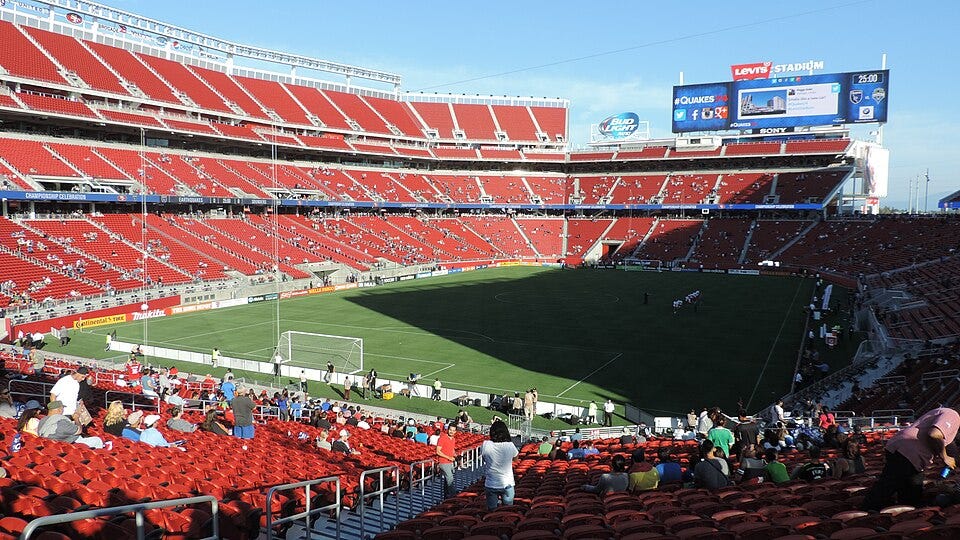
It’s not ideal that this stadium is in Santa Clara, which is about an hour drive from San Francisco, but the location isn’t really the problem. It’s central enough to the whole Bay Area, has easy airport access to SFO and SJC, and CalTrain makes it more than accessible enough.
The problem is that it feels like they spent about 80% of the $1.3 billion (inflation adjusted $1.8 billion today) this stadium cost on the one premium seating tower. Inside there, it’s very nice and comfortable, but the rest of the stadium is an erector set of charmless stands that you would swear was built on the cheap.
Making matters worse, there’s no shade anywhere in the stadium. You might think, “it doesn’t get hot in San Francisco, so why does it need shade?” but you know where it does get very hot? Santa Clara. Day games in the summer and sometimes even into October are absolute scorchers and sitting in the stands at Levi’s is presumably how a baked potato feels in the oven.
Then, to make matters worse, the 49ers practice facility is on one side of the stadium and a river is on the other, so there’s actually choke points trying to walk in and out of games.
I have literally nothing nice to say about Levi’s Stadium. Every time I’ve been there, I’ve wondered where the hell the $1.3 billion went because I’ve been to stadiums that cost half as much that are better and with more charm.
14. Mercedes-Benz Stadium, Atlanta
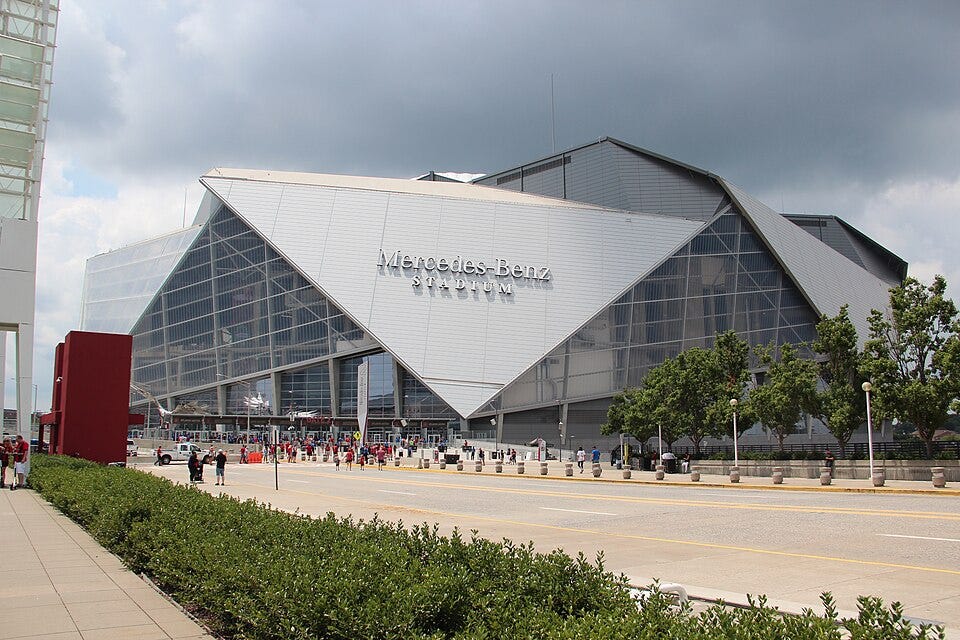
This is an easy stadium to love from afar. It’s climate controlled, it has a unique pinwheel roof that is very cool to watch in action, the 360 degree video board was the first of its kind and they keep concession prices absurdly cheap.
All of those things are good, but you know what none of those things do? Make it a good place to watch a game in person or on TV.
It’s a bad stadium to watch a game at if you’re in the building because the field boxes push the lower bowl up, and the suites push the upper deck even further away. That’s if you can even see the entire pitch because this stadium is riddled with obstructed view seats for soccer. From some of the lower bowl seats behind the goal, you can’t even see the goal in front of you.
And on TV, the field suites make it look like there’s no energy in the building, and are somehow better views than the corners, where all you can see past the pitch from the main camera angle is a giant wall.
This stadium is a textbook case of doing a lot of things right, but it not mattering because you got the basics wrong.
13. MetLife Stadium, New Jersey/New York
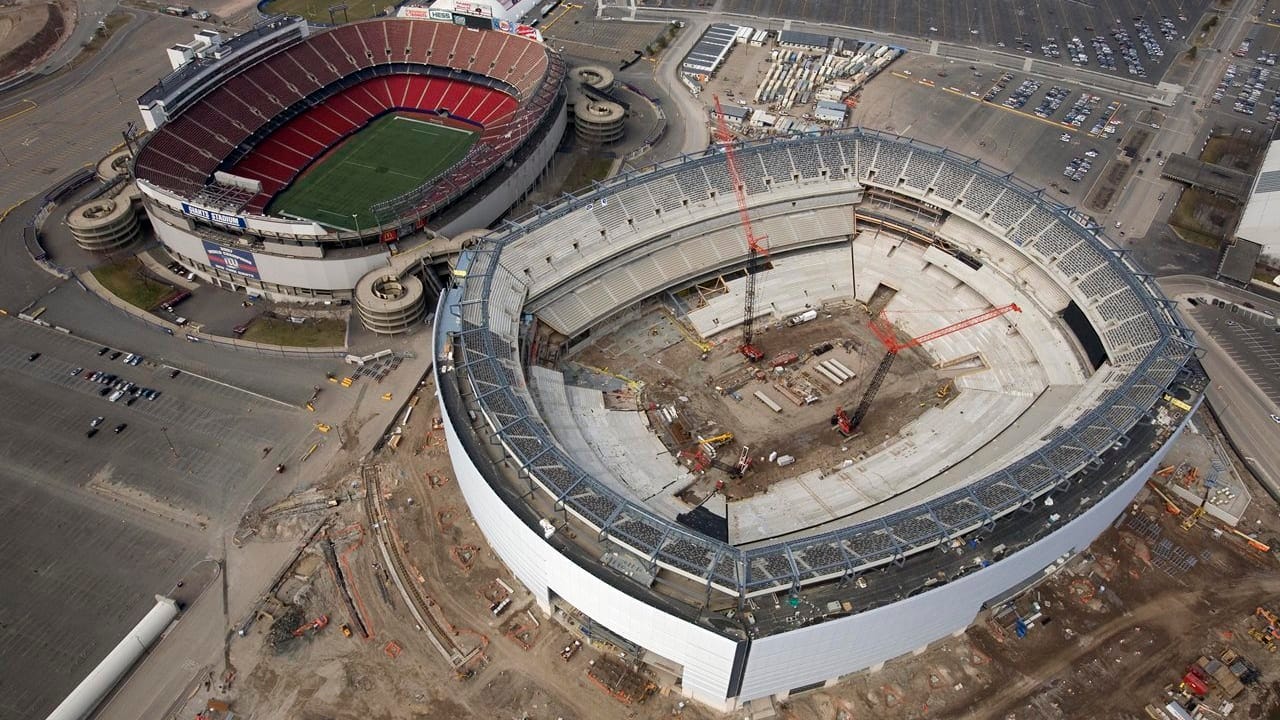
The only thing this stadium has going for it is that it’s in New York. Well, it’s in New Jersey, but it’s near New York so everyone from New York can get there. Except that they can’t drive there for this World Cup. But at least there’s a train, if they can get a spot on it. And there are buses too, if you can afford them.
Other than its location, this stadium is exceedingly fine by modern American standards. It’s a simple three-tier bowl, there are videoboards in the corners and it functions. You never feel exceedingly far from the action and the bowl isn’t so broken up that sound and energy gets lost between the groups of people.
The flip side of that is there is not a single remarkable or memorable thing about this stadium and when you remember how it dwarfed the old Giants Stadium that it was built next door to, you realize how much bloat American stadiums have gone through. The need to pack so many special features, premium seating and advertising into the modern stadium made this stadium, which only holds 2,000 more people than its predecessor, relatively gargantuan. And all that extra space? That’s just how much farther away you are from the field.
And to think, this phenomenon has only gotten worse in the 16 years since it opened.
12. Gillette Stadium, Boston
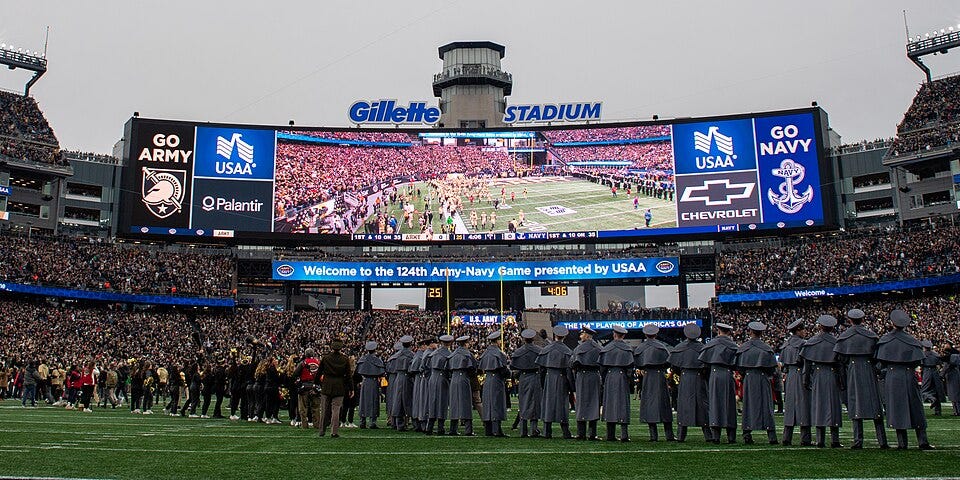
If MetLife is the symbol of 2010’s NFL stadium bloat, Gillette Stadium pretty well captures where we were in the 2000’s. The stadiums were getting bigger and the upper decks were getting pushed further away for luxury suites, but it hasn’t reached laughable proportions yet. It still felt reasonable, and, most importantly, we hadn’t started making everything a generic tableau of whites and blacks and grays.
Kitsch still had a place in the 2000’s of American sports and so Gillette got a giant light tower overlooking the whole place. Is it goofy? Of course, but it gives the building some character.
Other than that, the stadium is fairly generic. The views are fine, the bowl is unremarkable and the new, gigantic video board has enclosed the stadium in a way that in some ways feels more complete, but in others feels less unique. Unfortunately, that renovation also came with field suites, which, if you haven’t picked up on yet, are my enemy.
All in all, it’s a solid building that would be higher if it wasn’t all the way down in Foxborough, where there’s only one highway in and out and a train that doesn’t even run for all events at the stadium.
11. SoFi Stadium, Los Angeles
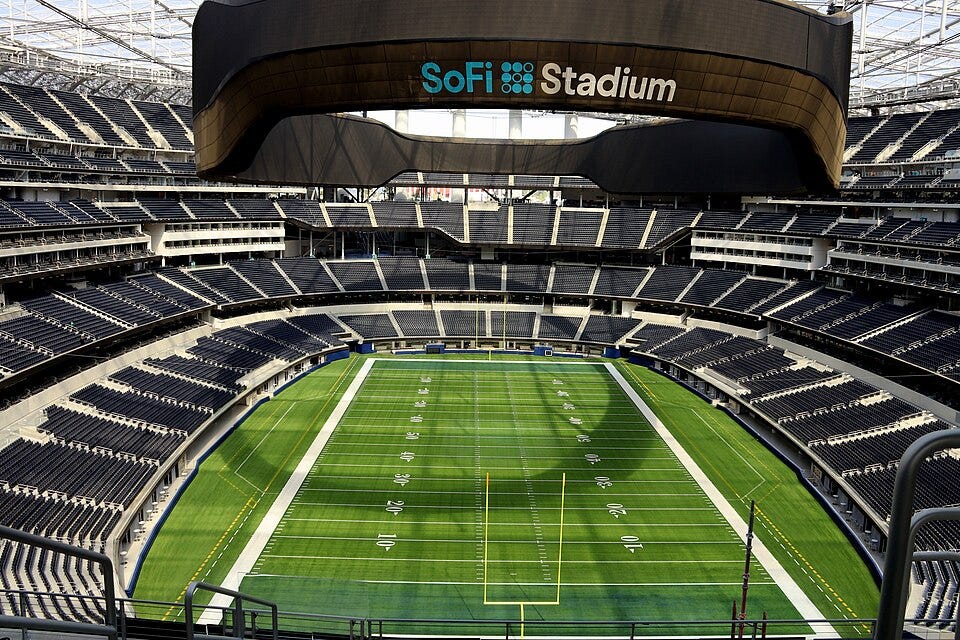
Everyone marvels at SoFi Stadium. It opened in 2020 and immediately you could tell where the record $5 billion-plus it cost to build the stadium went.
The translucent roof swoops over the whole place, but it’s not actually enclosed. The roof acts more like an umbrella, with the side open to the elements. That means the concourse has trees and plants. They even built a lake outside of it. It’s really charming and the videoboard is enrapturing.
The problem is none of that is actually useful when you sit in your seat and try to watch a game. There are five levels of seating, not including the suites, so the crowd is incredibly broken up and it kills the fan energy. The rake of the stands is also really shallow, so despite all those levels, it never really feels intimidating or like you’re on top of the action. By the time you get to the top of the stadium, you feel like you’re in the clouds and not because the stadium is so big - it seats a modest 70,000 - but because the reason there are all those different tiers and shallow rakes, with the top deck so high up is they packed premium seating in everywhere.
SoFi Stadium is great for everything except for watching the game and holding energy in the building.
10. Hard Rock Stadium, Miami
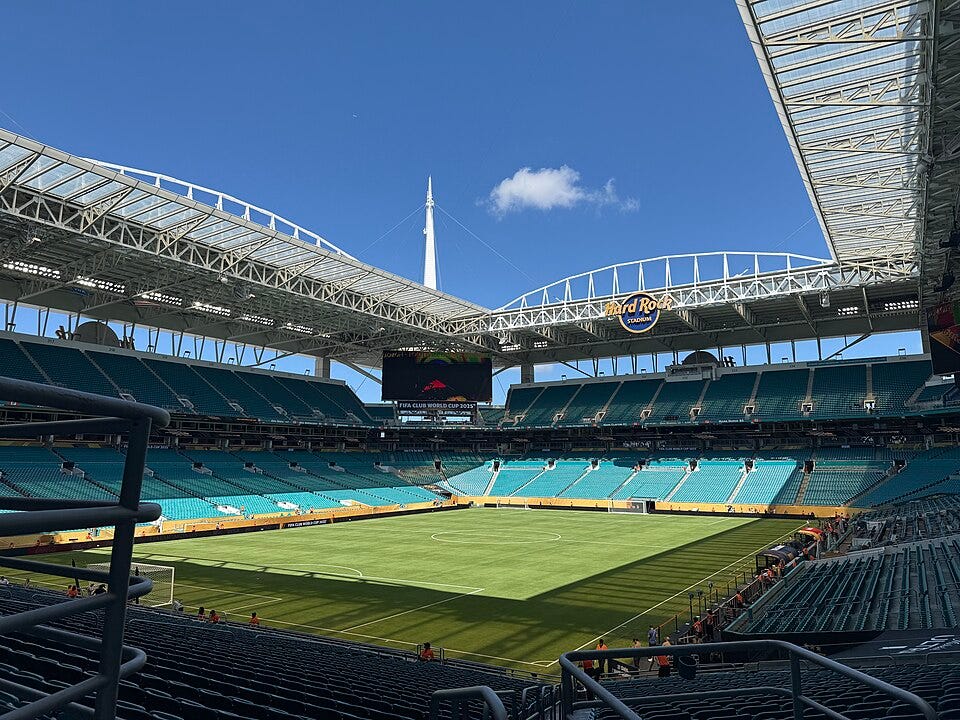
Back when this was Joe Robbie Stadium, it was a simple two-tier octagon. It has since taken on seven different names as naming rights have come and gone, but more importantly, it has been extensively renovated.
It now has a roof over the stands2, supported by cables anchored at all four corners, and they pulled out the seating in the corner of the upper deck for video boards, creating a feeling of almost four distinct stands. It’s downright European. And when you’re in your seat, the place really works. The roof keeps you shaded and dry, which can be a lifesaver in South Florida, and it also helps create an intimate atmosphere that holds noise. There are few bad seats and, other than the gauche midfield premium seating in gigantic recliners, the premium seating is mostly tucked away.
From kickoff to the final whistle, you’re going to have a good time at Hard Rock Stadium. When you need to go to the bathroom or grab something to eat in the cramped, dingy concourse, not so much. And good luck getting to or from a game there, with traffic at a standstill forever, the rideshare pickup lot over a mile away along a poorly lit and marked trail, and the only public transit requires a long way to a shuttle to sit in the same traffic as everyone else so you can get to the Brightline station.
The architects did their job, though, and it’s so perfectly NFL that they don’t even care about that part.
9. BMO Field, Toronto


The first actual soccer stadium on the list is, unsurprisingly, not American.
That BMO Field is actually hosting World Cup matches is pretty wild considering it opened as a pretty minimalistic venue in a parking lot on the lake. It was intended for the 2007 U-20 World Cup and to house the expansion Toronto FC in an MLS that was so nascent anyone who called themselves a fan was also calling themself a sicko3, but it’s come a very long way since then.
Grass replaced the original artificial turf, a second deck was added on a sideline that pushed the capacity by over 8,000 and a roof was added to three sides. It started to finally resemble a proper soccer stadium, but it also left room for expansive temporary seating, which proved crucial for this World Cup as its fixed 25,000-seat capacity is being pushed to over 40,000.
Temporary seating to expand stadiums for World Cups isn’t new and has been done for each of the last four tournaments. It may look a little rickety, but it functions just fine and none of the seats at BMO Field, even the temporary ones, are reasonably close to the pitch.
There’s not a single thing about this stadium that will wow you, but it puts a bunch of people near the pitch, with downtown just a hop, skip and jump away and transit right by. Sometimes it’s just about taking care of the basics and BMO Field does that.
8. Lincoln Financial Field, Philadelphia
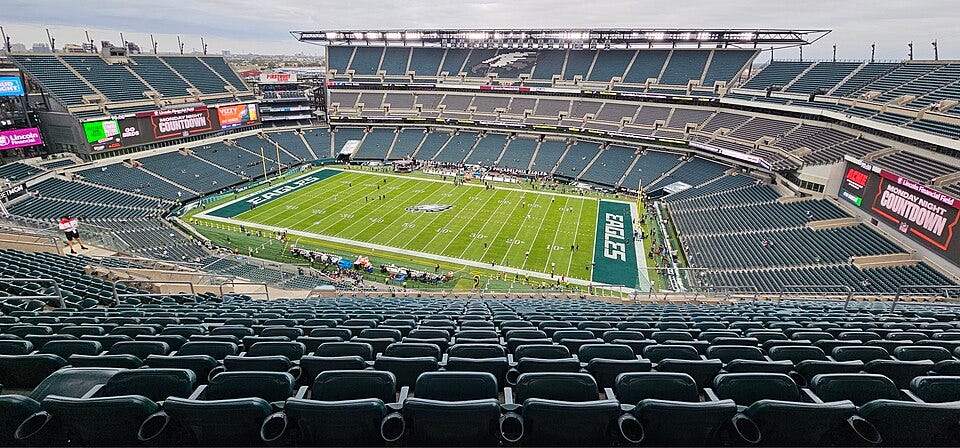
The stereotypical American stadium is a big building in a swath of parking lots, but Philadelphia does things a little differently - they put all of their stadiums in a swath of the same parking lots. The Eagles, Phillies, 76ers and Flyers all play at the same sports complex on the edge of downtown, so Lincoln Financial Field is surrounded by concrete, but at least each of the two other venues don’t have their own parking lots. And, most importantly, it’s got transit access so while there is no shortage of parking for people, you don’t have to drive. 10 minutes on a train from downtown will land you right at the stadium.
Other than location and accessibility, Lincoln Financial Field is a lot like Gillette Stadium, which opened just one year earlier so it’s from the same generation of stadiums. You have stadium bloat, but not too bad in its three-tier design that gets everyone a solid view from the first row to the last. They’ve even greened up the stadium in recent years, adding energy-generating windmills that are charming, and the angular design in everything from bowl shape, to roof, and videoboards, gives the place some character.
6. AT&T Stadium, Dallas


Jerry World is now, astonishingly, 17 years old. The stadium that blew people’s minds when it opened is now somewhat run-of-the-mill by NFL standards. So there’s a giant retractable roof they never open, everyone does that now. And you’re not going to impress me with your museum-grade art collection that dots the hallways of the suite level.
And yet, AT&T Stadium is actually a nice place to watch a game. It feels reasonably small by modern standards, with only the upper deck feeling far away and not even that far away compared to some of the new places. The lower bowl is pretty close to the action and its biggest sin - the pitchside suites that put a barrier between the general seating and the field, while also looking terrible on TV - aren’t going to be in play for this World Cup. The elevated platform to hold the grass pitch is sitting above those awful suites. This is the best AT&T Stadium will ever be.
I can’t imagine being a Cowboys fan and having to call this my home stadium. It doesn’t feel specific to anyone or like anyone’s home. Its magic is in its ability to transform, get decked out in the branding for whatever event it’s hosting that day and immediately give off the impression that it was built for that. It’s going to do that great for this World Cup.
6. BC Place, Vancouver
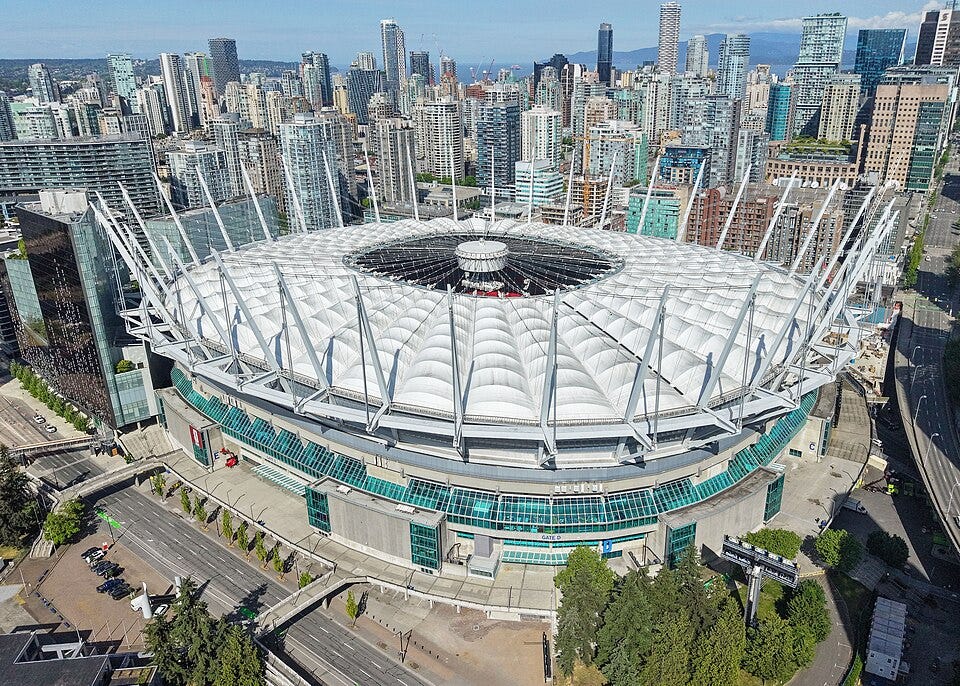
BC Place has been in the soccer news recently and not for good reasons. The Vancouver Whitecaps might move from the city because they cannot make enough money at BC Place to satisfy their owners or entice buyers to pay hundreds of millions for the club, but that doesn’t make it a bad stadium or justify the Caps’ owners belief4 that they are entitled to extract wealth from the team.
It’s actually a rather nice stadium in a great location. The two-tier bowl with minimal premium seating brings everyone right on top of the pitch and you can feel the energy from the lower level move up, just like you can feel the upper deck energy transfer on town. When BC Place gets rocking, it’s a really special environment.
Toss in a gorgeous exterior with iconic white supports holding its retractable roof in place, the windows letting light into the stadium and feeling that it’s a proper soccer stadium5 that memorably hosted the 2015 Women’s World Cup final, and it’s easy to look past the dated concourses and other small issues. This is a fun place to take in a game and that MLS can’t make it work here says more about them than it does Vancouver or BC Place.
5. Arrowhead Stadium, Kansas City
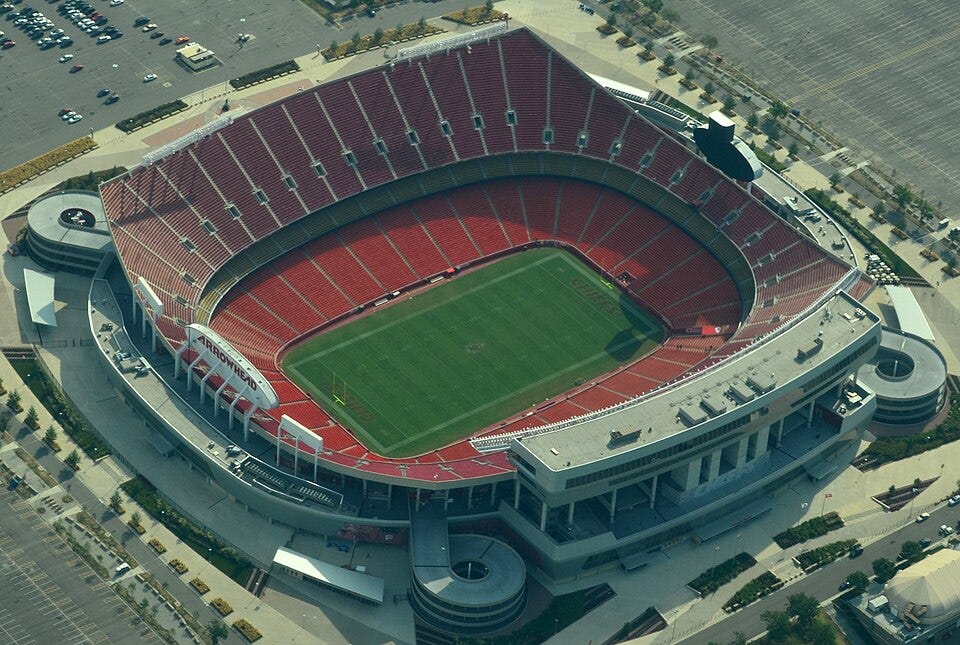
The second-oldest American stadium hosting matches at this World Cup is Hard Rock Stadium, which opened in 1987 and was so extensively renovated a decade ago that it feels new. After that, there’s not another stadium that opened more than 25 years ago.
And then there’s Arrowhead Stadium, est. 1972.
While the Kansas City venue did get a mid-2000’s renovation, it mostly added some elevators to the outside, tucked some new suites in discreetly, added a tower above it all and played with the videoboards and sound system. It didn’t really touch the seating bowl that is compact, well-tied together and comes from a playbook that we haven’t seen since the turn of the century.
People will tell you this place is great because it holds noise, or the history there, or any number of other things, but the reason it’s so special is because it’s a stadium built for lots of people to come in, sit next to each other and watch a game. Its beauty is in the simplicity of a time gone by.
If you want to see a game somewhere where the point is to actually watch the game with 70,000 other people, you’re not going to find many places better in the U.S. Sadly, it’s going away because none of that matters to the Chiefs, who will get to live out their dream of bankrupting Kansas for another soulless dome, but not in time for this summer. An American stadium meant for watching soccer will have its moment at this World Cup.
4. Estadio Akron, Guadalajara
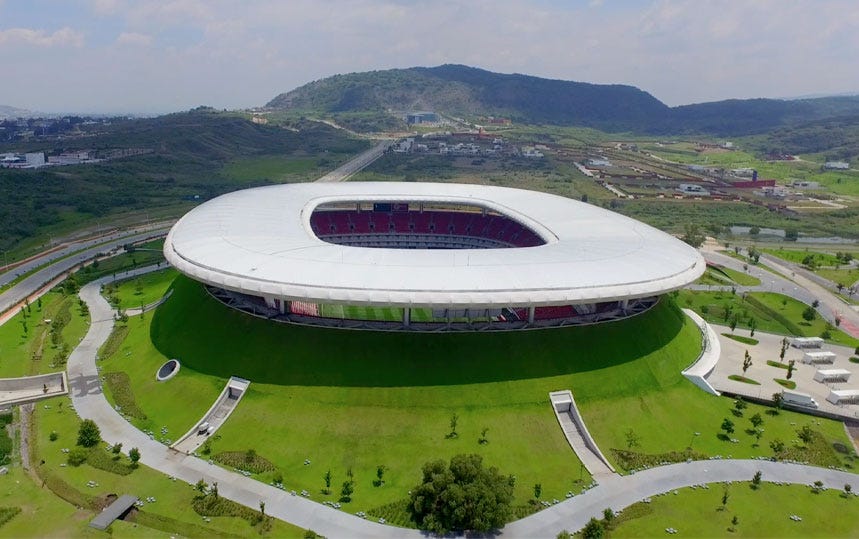
Everyone hated this stadium when it opened. How could Chivas leave the famed Estadio Jalisco for a new place on the edge of town that, to everyone’s horror, had artificial turf. Well, 16 years later it really feels like a great place for top level soccer and a proper World Cup stadium.
They ditched the turf at this stadium years ago, did a better job decking it out in Chivas garb and the time that’s passed has made it the site of enough memorable moments that it just feels right now.
That’s a good thing too because the design for this place is terrific. The two levels of general seating are close to the pitch, with the premium seating in between less intrusive and space-consuming than you see elsewhere. The white roof holds the lights and sits on supports that create a lot of air between the top row of seats and the covering, making it almost feel like it’s floating above the stadium. The stadium is also surrounded by lush green that grows all the way up the exterior of the stadium, making it look like the roof is floating on top of a grassy hill from the outside too. It’s beautiful and gives you a feeling unlike any other venue I’ve been to.
3. Lumen Field, Seattle
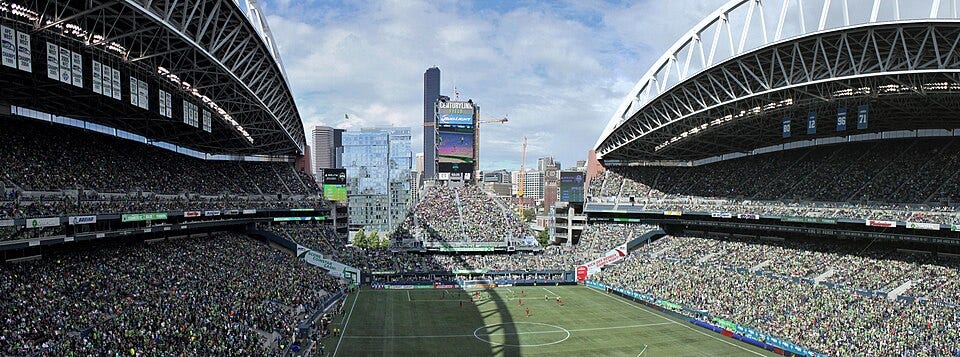
Did you know that America is capable of building a large stadium with soccer in mind, that has sightlines designed for the sport and is located in the city? We’ve only done it once, but it’s one hell of a place.
Lumen Field has field boxes behind one goal, but we’ll give them a pass on that because the rest of the lower bowl is so well-pitched and is right up against the field. Then, with the suite level reasonably well tucked away, the upper deck just hangs over the entire stadium, rising steeper and steeper before getting to a roof that covers both sidelines and was designed by acoustic experts to send noise right back down to the pitch.
If your priority in a soccer stadium is whether the seats have good views, the place absolutely rocks and it gives you the feeling that everyone in the building is vibing right there with you, Lumen Field is it for you. Oh, and you get a nice skyline view as an extra special treat.
Of course, the Sounders are now considering leaving this great, well-located stadium and the Seahawks are going to want to find a way to ruin it to cater to more rich people so it’s unclear how much Lumen Field will be one of America’s great stadiums, but it sure will this summer.
2. NRG Stadium, Houston
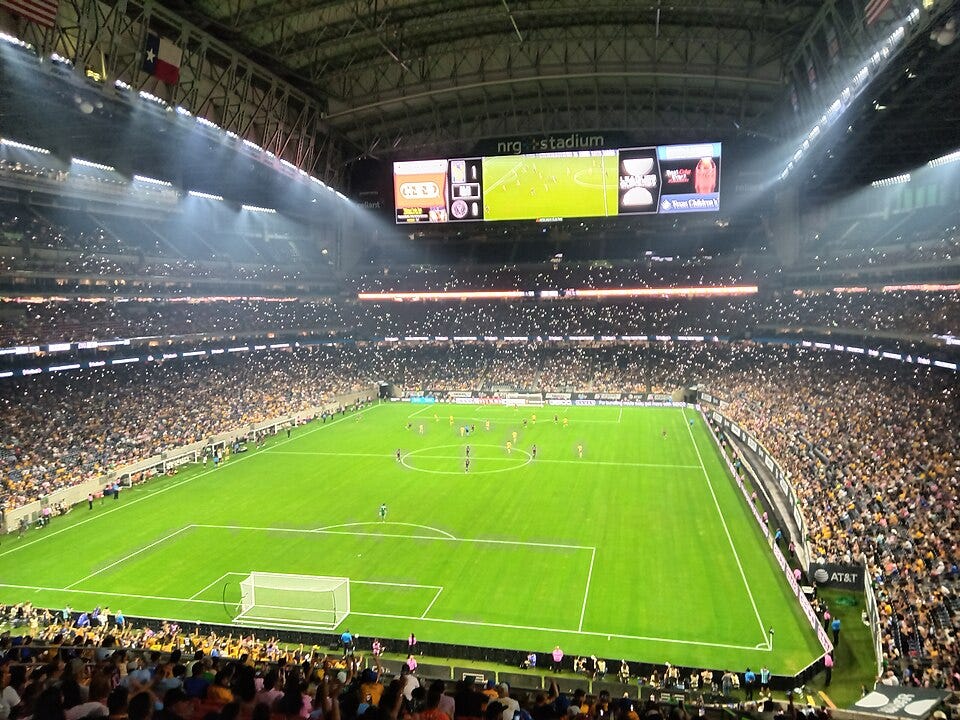
What if you built a 21st century San Siro, but with a roof? That’s what NRG Stadium is.
The big concrete pillars in the corner hold up towing stands that feel like they’re stacked on top of each other and reach the sky. The 72,000-seat venue looks like it holds 90,000, but is so intimate that when you’re in there it feels like it’s just 50,000.
The suite level is relatively thin, there are no field suites and even the scoreboards are pitched up at the top instead of pushing fans higher to be above them. As a result, sound just cascades down and you barely notice any gaps in energy or noise from one tier to the next. It acts as one giant bowl that just keeps rising.
NRG Stadium doesn’t get a lot of love in NFL circles, and part of the disaster of their attempts at a trayed grass system after it opened that put a bad taste in people’s mouths before they switched to turn, which makes some sense. It doesn’t feel like a football stadium. It’s unlike any other stadium in the league.
That’s because, at its core, it is a soccer stadium. It’s in the tradition of stadiums from overseas that we’re used to seeing in the Champions League, and it’s going to be the best America has to offer at this World Cup.
1. Estadio Azteca, Mexico City
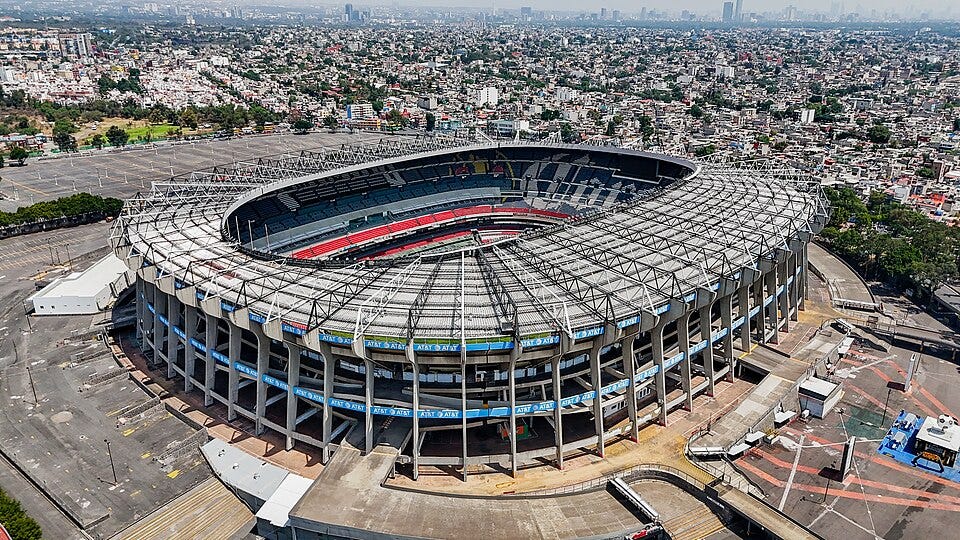
Was there any doubt? Actually, yes.
This famed stadium was ruined in the 2016 renovations. The lower bowl was gutted, set further from the pitch and replaced with boxes that were covered by bizarre tents. It created the feeling of a moat around the field, with the fans thrown way up top and removed from the action. Not only was it ugly and took fans away from the action, it depressed the energy in the stadium so much that the upper decks weren’t as loud and engaged as they once were.
When they agreed to renovate the Azteca for this World Cup, there was hope that they would fix things, but no guarantees. Now, with the work done and one match down we can safely say they did it right.
Basically, they took everything they did a decade ago and pressed “undo.” The lower bowl is whole once again and filled with real fans who are there to sit in their seat and watch the match. The dead air of the last 10 years is gone and the energy and noise that circled the ground before is back. It’s an intimidating, awe-inspired madhouse once again.
It’s not just the best stadium at this World Cup. It might be the best stadium in the entire world.
Do not confuse this with the public not spending money on stadiums for the World Cup at all. Even putting aside that nearly every one of these stadiums was built with hundreds of millions in public dollars each, governments spent tens of millions in many instances to bring stadiums up to FIFA standards.
The NFL told them to put a roof on it after they hosted a rainy Super Bowl, saying that they wouldn’t get another Super Bowl if they didn’t. So they added the roof and after one more Super Bowl, the NFL told them too bad, we still don’t like it so you’re not getting another one.
Speaking as a sicko.
With MLS’s full support.
Yes, the BC Lions of the CFL play here and it hosted the 2010 Winter Olympics ceremonies prior to renovation too, but you don’t really feel it in there.
The problem with MLS at Vancouver and Seattle is the same problem: it's not the club's stadium. Both the Sounders and the Whitecaps have to lease the stadium from someone else.
In Seattle's case, the best-case scenario (IMO) is that the Seahawks are sold to someone who, as part of the deal, says "okay, I'm selling the stadium to the Sounders and building a new one with 489 luxury boxes and 80,000 seats in a suburb" so the Sounders can take over Lumen. (Note: this almost certainly won't happen. Next-best-case scenario is the Sounders build a true soccer temple at their own land and development.)
Vancouver has no best-case scenario, because the province has been a huge pain in the ass for the club by actually expecting a market-rate return on the lease from the team, and anything else they build anywhere else won't be as good.
Their next-best-case scenario is they build their own decent, very Canadian stadium (ie, a bit boring, utilitarian, etc- see BMO in Toronto) out somewhere that's at least somewhat close to a train line. Hastings Park would work great if only the rail that goes right alongside actually was usable for transit. Maybe someday.